

I wrote what follows for a Unitarian Universalist service two years ago. Re-reading it, I think it can be of use right now.
A month ago, in early June, on a road trip to be with Andrea’s family in Michigan, Andrea, Fiona and I stopped to sleep for a few hours in a Quality Inn motel in Seneca Falls, New York. Before getting back on the New York Thruway, we went downtown to pay our respects at the site of the 1848 Women’s Rights Convention.

It was a sunny morning, and the lampposts of the town center were hung with the equally sunny faces of the graduating seniors of the local high school. The ones we saw as we approached the Wesleyan Chapel where the momentous meeting took place were all young women, direct beneficiaries of the work that had been done on that spot 174 years before.
We were there on a Monday morning, and it was just 9 o’ clock. The front door of the rebuilt brick chapel was open, so we slipped in and began reading the explanatory signs and captions of photographs. A woman in her 20s in a tan National Park Service uniform and a Smokey the Bear hat tipped over her eyes welcomed us and said we were in time for the tour if we wanted to join. A university age group of about 20 came in and grouped around her. We slipped to the margins as she began to speak—we were there to soak up atmosphere, but we wanted to soak it up quick, and get breakfast and get back on the road.
As the ranger/docent continued to say out loud the information on the placards for the benefit of those with auditory learning styles, I backed over to the wall of the reconstructed building, to one of the remaining sections of the original, ruddier, faded bricks. and placed the palm of my hand flat against it, while I looked across the room at a mural portraying some of those who’d been in this room that long ago pair of days, including titans like Lucretia Mott, Elizabeth Cady Stanton, and Frederick Douglass.
The context of our short visit to Seneca Falls was that Samuel Alito’s draft Supreme Court opinion in the Dobbs v. Jackson case had already been leaked. We were all wrestling with whether such foundational settled rights as bodily autonomy could really be wrenched away. With my hand still pressed to the bricks that had witnessed the courage and clarity of the Seneca gatherees, I looked to absorb through my skin some little bit of their courage and hope.
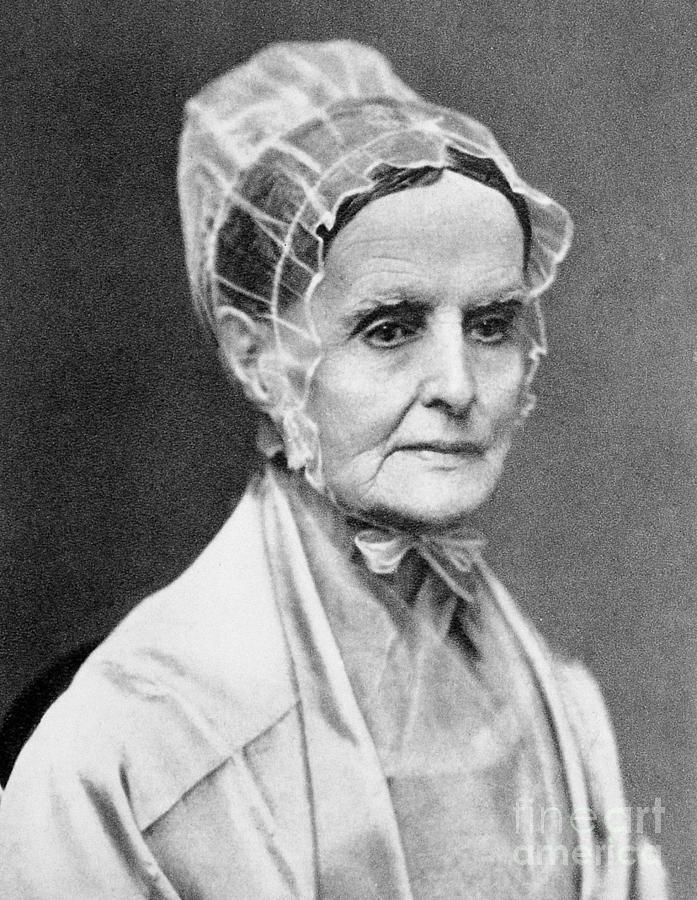
As much as anyone, Lucretia Mott had brought them together. A Nantucket-born Quaker, she was 55 at the time, and she was 27 years into a career as a traveling Quaker minister, preaching the inner light of God in every person, and preaching a consistent, integrated abolitionism, urging her listeners not to collaborate with the slavery-based economy, to give up cotton and cane sugar, among other things. Although she’s not one of the names everyone learns in school today, she was considered by many to be the greatest American woman of the century at the time she died. Listen to what Frederick Douglass himself said of her:

“I shall never forget the first time I ever saw or heard Lucretia Mott. . . .In a few moments after she began to speak, I saw before me no more a woman, but a glorified presence bearing a message of light and love. Whenever and wherever I have listened to her, my ‘heart has always been made better and my spirit raised by her words.”
As I soaked up the atmosphere in that spacious room of old and new bricks, as the docent continued to talk on, I thought of all Mott and Douglass accomplished in their long careers, but also of all the hardships and setbacks, and all that they didn’t live to see. What held them together? What gave them the strength and stamina?
Above all, they were allies to one another. For example, Douglass was at that 1848 conference because many of the women who organized the meeting had distinguished themselves as abolitionists before they became known for their work on behalf of women’s rights. Sometimes they fell short, tactical differences created breaches, but their loyalty to common principles and their regard for each other shortened the road.
I often come back to something I heard climate hero Bill McKibben say once. When asked what an individual can do, he said, “Become less of an individual.” Band together. Draw inspiration from each other. Make tyrants tremble at our united, sustained power.
It is heartbreaking what we’re up against, that we still have to face the same antagonists as our ancestors, the retrograde forces of white patriarchal Christian cis-gender hegemony… But even the greatest of us do just what they can do, and then set down the baton where they leave the race, and leave it to those who follow to pick it up. Time, mortality, and progress are mysteries.
Human history is so short. One illustration: Douglass, who can sometimes feel like such a distant historical figure, died in February 1895. Three of my grandparents were already born, and the fourth would come into the world later that year. We’re here for the blink of an eye, and we must find inspiration where we can while we’re here… So place your palm on the bricks and bring the ancestors in. And bask in each other’s glorified presence, the light and love of each other that makes our hearts better.
Courage.

 Andy Davis, Storyteller
Leave a comment